Short Passages
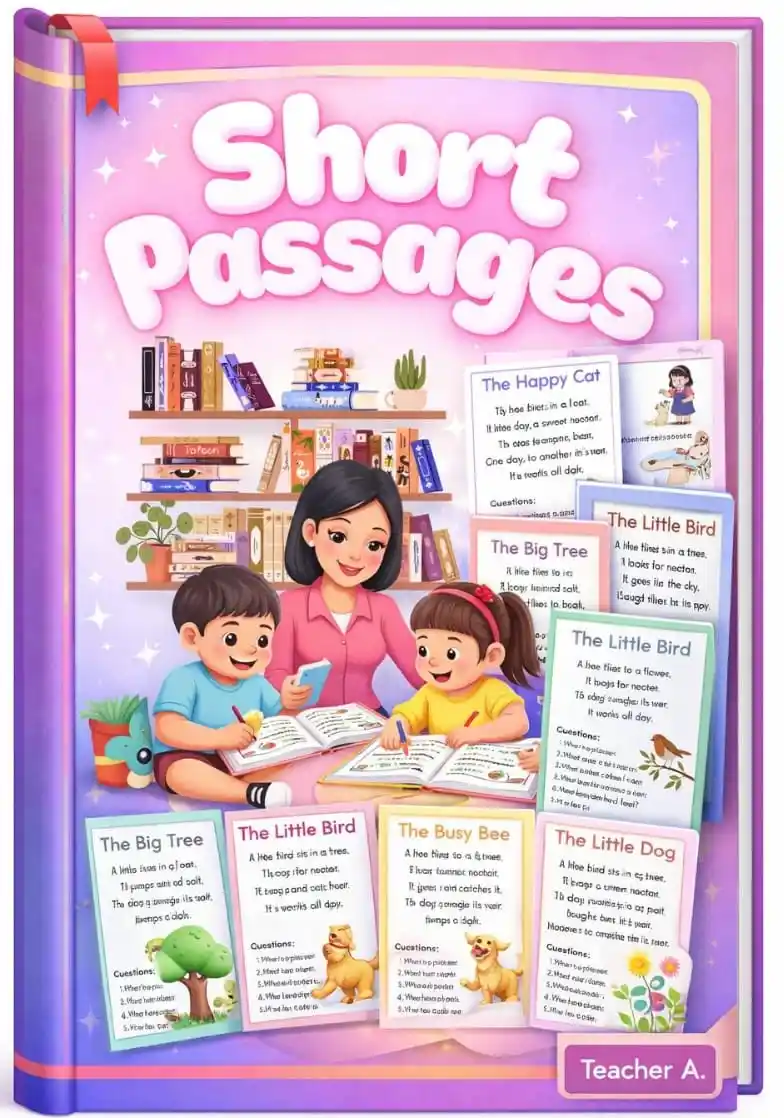
Short passages are one of the most effective tools for building reading fluency, comprehension, and confidence in young learners. Unlike long chapters or dense articles, short passages allow children to practice reading without feeling overwhelmed. A well-written short passage—typically four to eight sentences—gives students a complete idea or story in just a few minutes. This makes daily reading practice easy, enjoyable, and highly productive.
Why Short Passages Work So Well
Many struggling readers shut down when faced with pages of text. Short passages solve this problem by offering a clear beginning, middle, and end in a compact format. A child can read an entire passage about a friendly dog, a rainy day, or a trip to the zoo in under two minutes. This quick success builds motivation. Teachers and parents love short passages because they are easy to create, grade, and discuss. After reading, you can ask three simple questions: “What happened first? What was the main idea? What did you learn?”
Research shows that repeated reading of short passages improves word recognition, pacing, and expression faster than longer texts. The reason is simple: students can reread the same passage multiple times without frustration, which locks in correct reading habits.
How to Use Short Passages at Home or in Class
Using short passages effectively takes just ten minutes a day. Follow this routine:
- Day 1: Read the passage aloud while your child follows along.
- Day 2: Have your child read the same passage to you. Offer help only when stuck on a word.
- Day 3: Time your child as they read. Celebrate improved speed and fewer errors.
- Day 4: Ask comprehension questions or have your child draw a picture of the passage.
- Day 5: Move to a new passage and repeat.
For best results, choose short passages that match your child’s reading level. Too hard, and they will guess. Too easy, and they will not grow. Aim for 90 to 95 percent accuracy.
Where to Find Quality Short Passages
You can write your own short passages using topics your child loves—dinosaurs, sports, animals, or superheroes. Keep sentences simple, use familiar words, and add one or two new vocabulary words per passage. Many free websites and printable books also offer hundreds of short passages for kindergarten through third grade.
Start Today
Grab a pencil and a piece of paper. Write a short passage about your morning routine. Read it together. Then watch your young reader’s confidence grow—one short passage at a time.